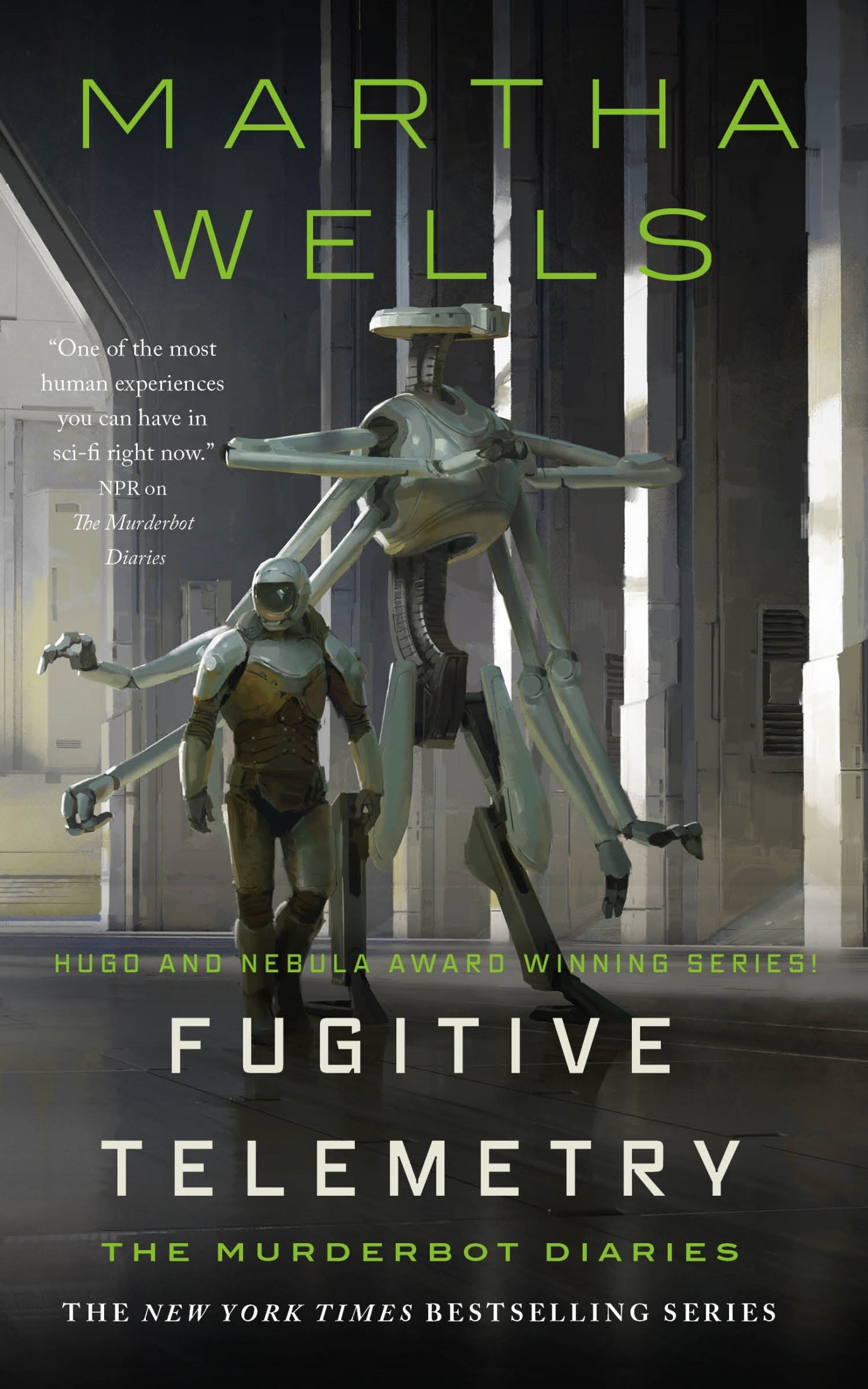
No, I didn’t kill the dead human. If I had, I wouldn’t dump the body in the station mall.
When Murderbot discovers a dead body on Preservation Station, it knows it is going to have to assist station security to determine who the body is (was), how they were killed (that should be relatively straightforward, at least), and why (because apparently that matters to a lot of people—who knew?)
Yes, the unthinkable is about to happen: Murderbot must voluntarily speak to humans!
This isn't a bad Murderbot novella, but it doesn't really move enough forward enough for me to appreciate it as anything more than an action/detective side event in between the much more emotionally impactful Exit Strategy and Network Condition. I think my favorite parts of this book are Murderbot snarkily interacting with Indah and station security, where it's trying to one up them but also do its job and also (mostly) obey the rules that they've given to it.
This novella does get some more into Mensah's trauma (and avoidance) but I'm not sure this story is doing extra on top of what Home or Network Condition is doing, and her trauma is not the thematic focus of this novella either. (Although what that focus is, I'm not sure I could really pin down. Maybe that's part of the problem.)
If Murderbot was going to stick around in …
This isn't a bad Murderbot novella, but it doesn't really move enough forward enough for me to appreciate it as anything more than an action/detective side event in between the much more emotionally impactful Exit Strategy and Network Condition. I think my favorite parts of this book are Murderbot snarkily interacting with Indah and station security, where it's trying to one up them but also do its job and also (mostly) obey the rules that they've given to it.
This novella does get some more into Mensah's trauma (and avoidance) but I'm not sure this story is doing extra on top of what Home or Network Condition is doing, and her trauma is not the thematic focus of this novella either. (Although what that focus is, I'm not sure I could really pin down. Maybe that's part of the problem.)
If Murderbot was going to stick around in Preservation space and Indah was going to become a recurring character, or we were going to have ongoing themes of Murderbot trying/failing to fit into Preservation systems and culture, then maybe this could have felt more impactful in retrospect.
I have a spoiler-y offhand comment, so I'll post that separately.
Murder, Mystery, and Media: A Review of Fugitive Telemetry
4 stars
"Fugitive Telemetry," the sixth book in Martha Wells' acclaimed Murderbot Diaries series, delivers a delightful blend of snark, mystery, and reluctant heroism. Our beloved, misanthropic SecUnit, who would much rather binge-watch media in peace, finds itself embroiled in a murder investigation on Preservation Station.
The story kicks off with a dead body, disrupting Murderbot's plans for a quiet existence. This unexpected murder propels our anti-social protagonist into the role of a detective, navigating the intricacies of a space station murder mystery. With its characteristic wit and dry humour, Murderbot reluctantly engages with the humans of Preservation Station, who not only distrust it but also impose restrictions on its ability to hack systems and move freely.
This locked-room whodunit is packed with sarcastic commentary and clever insights, as Murderbot maneuvers through the investigation, uncovering clues and dealing with the prejudices that still linger despite robots being considered people. The …
"Fugitive Telemetry," the sixth book in Martha Wells' acclaimed Murderbot Diaries series, delivers a delightful blend of snark, mystery, and reluctant heroism. Our beloved, misanthropic SecUnit, who would much rather binge-watch media in peace, finds itself embroiled in a murder investigation on Preservation Station.
The story kicks off with a dead body, disrupting Murderbot's plans for a quiet existence. This unexpected murder propels our anti-social protagonist into the role of a detective, navigating the intricacies of a space station murder mystery. With its characteristic wit and dry humour, Murderbot reluctantly engages with the humans of Preservation Station, who not only distrust it but also impose restrictions on its ability to hack systems and move freely.
This locked-room whodunit is packed with sarcastic commentary and clever insights, as Murderbot maneuvers through the investigation, uncovering clues and dealing with the prejudices that still linger despite robots being considered people. The tension between Murderbot's desire for solitude and its evolving sense of duty adds depth to the narrative, making for an engaging and multifaceted read.
Wells masterfully balances the humour and the suspense, creating a story that is as thought-provoking as it is entertaining. "Fugitive Telemetry" is a testament to her skill in character development and world-building, as we see Murderbot's growth and its interactions with the humans around it.
For fans of the series, this instalment offers another captivating adventure with our favourite snarky AI. If you're new to the Murderbot Diaries, prepare to be hooked by the unique blend of science fiction, mystery, and the irresistible charm of a robot that just wants to be left alone.